School Crosswalk Markings and Roadway Crossing Signs for Schools, Colleges, and Libraries
Thermoplastic, Epoxy and Painted Crosswalk Markings and Roadway Crossing Sign Installation — MUTCD-Compliant, Fully Installed by A&A Safety
A marked school crosswalk is more than paint on pavement. It is a system that includes pavement markings and signs working together to slow drivers, clarify where students cross, and reduce the risk of a pedestrian-vehicle conflict. When that system is properly specified, installed, and maintained, it protects children and reduces liability for the municipalities responsible for those roads.
A&A Safety provides the complete school crosswalk package: thermoplastic or epoxy pavement markings, painted crosswalk markings, and crossing signs; fully installed to MUTCD specifications by our own crews across Ohio, Indiana, Kentucky, and seven other states. We will also guide you through upgrade options including solar-power, blinking lights and radar speed signs.
School Crosswalk Pavement Markings
MUTCD-compliant crosswalk markings define the pedestrian crossing path and provide a clear visual cue to drivers to expect pedestrians. A&A Safety installs school crosswalk markings in three materials — epoxy, thermoplastic, and traffic paint — each suited to different road conditions, traffic volumes, and budget considerations.
Epoxy Crosswalk Markings
Epoxy is a two-component, solvent-free pavement marking material that chemically bonds to the pavement surface as it cures, producing an exceptionally durable, hard-wearing marking. For school crosswalks on high-traffic roads, concrete surfaces, or locations where longevity is the top priority, epoxy is the highest-performance option available. Its tight chemical bond to the pavement surface makes it particularly well-suited for crosswalks that see heavy pedestrian and vehicle traffic year-round, and its fast cure time minimizes lane closure duration during installation.
Thermoplastic Crosswalk Markings
Thermoplastic is the most widely specified material for school crosswalks on higher-volume roads. Applied hot and bonded directly to the pavement surface, thermoplastic markings resist wear significantly longer than paint and maintain retroreflective performance over their service life. Standard bar, ladder, and continental (high-visibility) patterns are all available. For most municipal school crosswalk programs, thermoplastic offers a strong balance of durability, cost, and MUTCD compliance.
Painted Crosswalk Markings
Traffic-grade pavement paint is the most economical option and a practical choice for lower-volume roads, interior campus drive aisles, and interim or temporary installations. A&A Safety applies painted markings to MUTCD line width and spacing specifications. While paint typically requires reapplication every one to two years depending on traffic and weather conditions, it is a compliant and budget-conscious solution for the right location.
Crosswalk Pattern Options
The pattern selected for a school crosswalk affects both visibility and durability. A&A Safety installs all three standard MUTCD patterns:
- Standard transverse bar pattern — two parallel lines marking the edges of the crossing. The baseline MUTCD pattern for most crosswalk locations.
- Ladder pattern — parallel lines across the full width of the crossing, creating a ladder appearance. Provides higher contrast than the standard bar pattern and is preferred for many school crosswalk locations.
- Continental (high-visibility) pattern — parallel longitudinal bars running in the direction of pedestrian travel. Provides maximum visibility and is recommended by the Federal Highway Administration (FHWA) for higher-risk pedestrian crossings, including many school zones.
Examples of Crosswalk Markings

Roadway School Crossing Signs
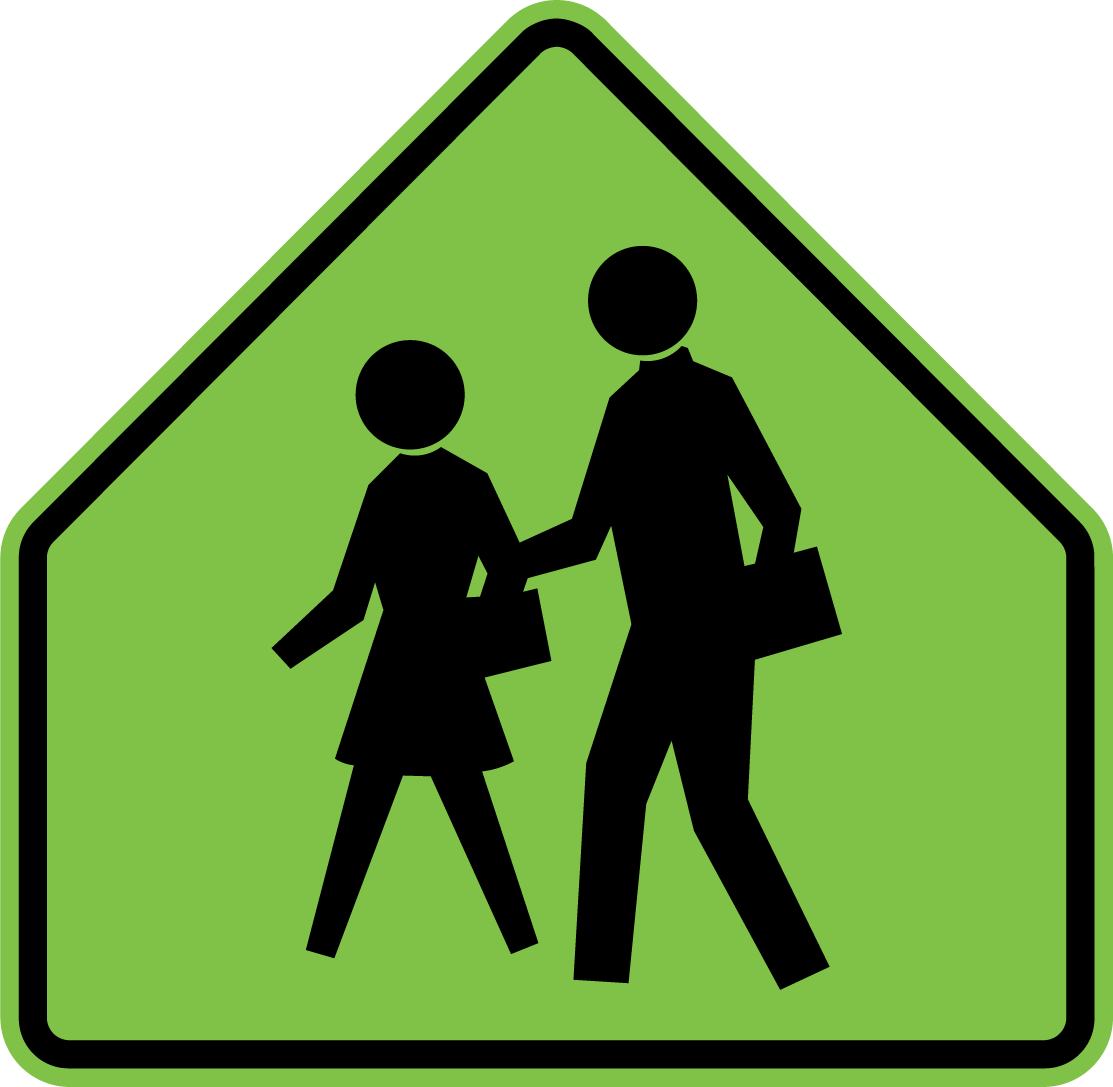 A&A Safety supplies and installs complete crossing sign assemblies. Post-mounted school area signs alert drivers in advance of a crossing, and a sign mounted in the center of the road places that alert directly in the driver’s path. MUTCD permits a School Advance Warning Sign (S1-1) installed in the roadway at the center of an unsignalized crosswalk as a supplement to post-mounted signing.
Additional methods of drawing attention to the crosswalk are through Rectangular Rapid Flash Beacons and Decorative Crosswalks.

Rectangular Rapid Flash Beacons (RRFBs): Active Warning at School Crosswalks
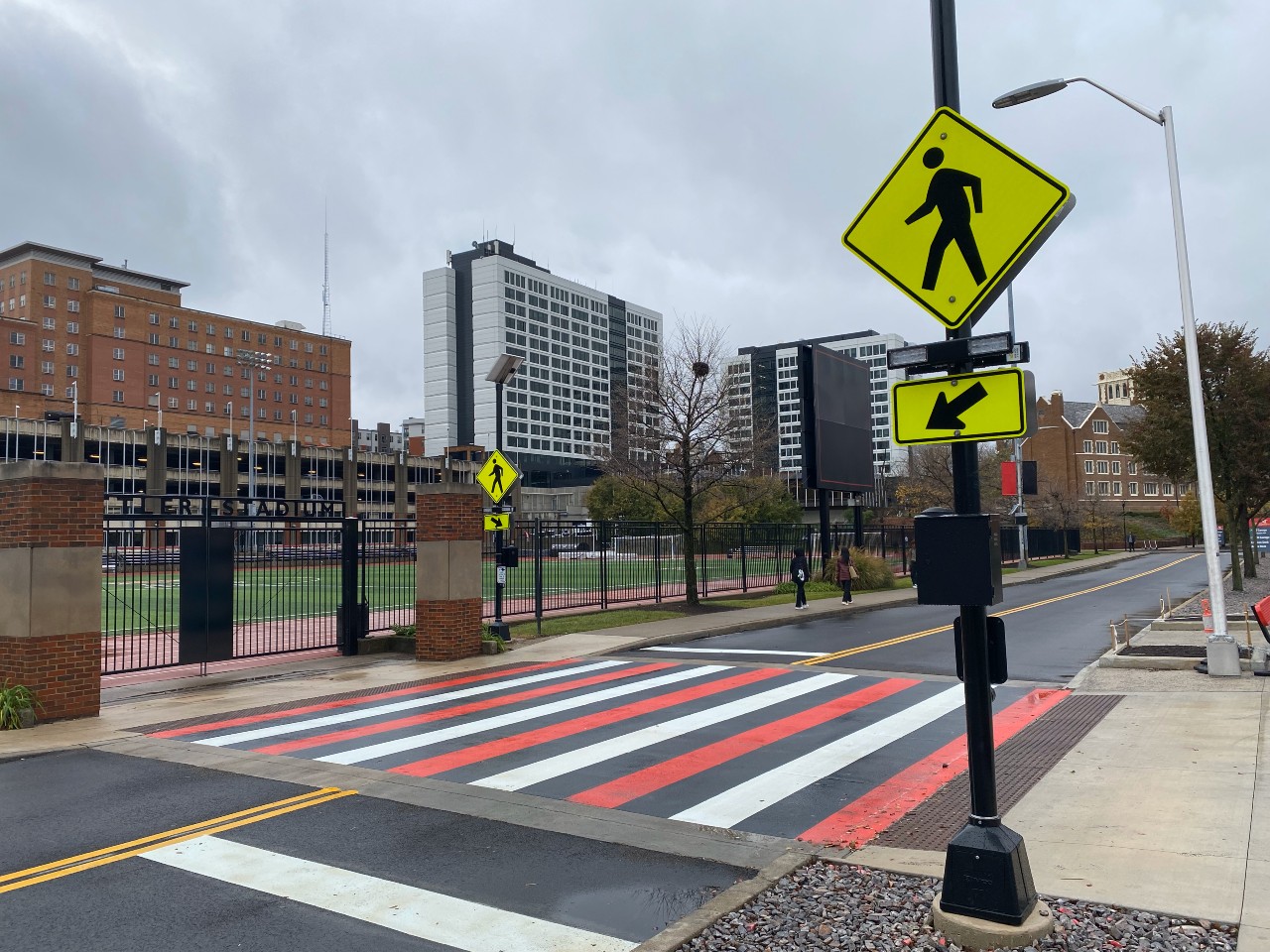
A marked crosswalk and good signage go a long way — but at higher-risk school crossings, a Rectangular Rapid Flash Beacon (RRFB) takes driver alertness to another level. Pedestrian-activated and mounted alongside the crosswalk signing assembly, the RRFB emits a high-intensity irregular flash pattern when a student or crossing guard presses the activation button. Research cited by the FHWA shows RRFBs can increase driver yielding at crosswalks to over 90%, compared to roughly 18% at a standard marked crosswalk. The MUTCD established formal standards for RRFB flash patterns and placement. Solar-powered units are available for locations without electrical service.
A&A Safety supplies and installs RRFB assemblies at school crosswalks across the region. For full details on beacons and enhanced visibility options for school zones, see our School Signs page.
Decorative Crosswalks: Safety and School Spirit on the Same Canvas
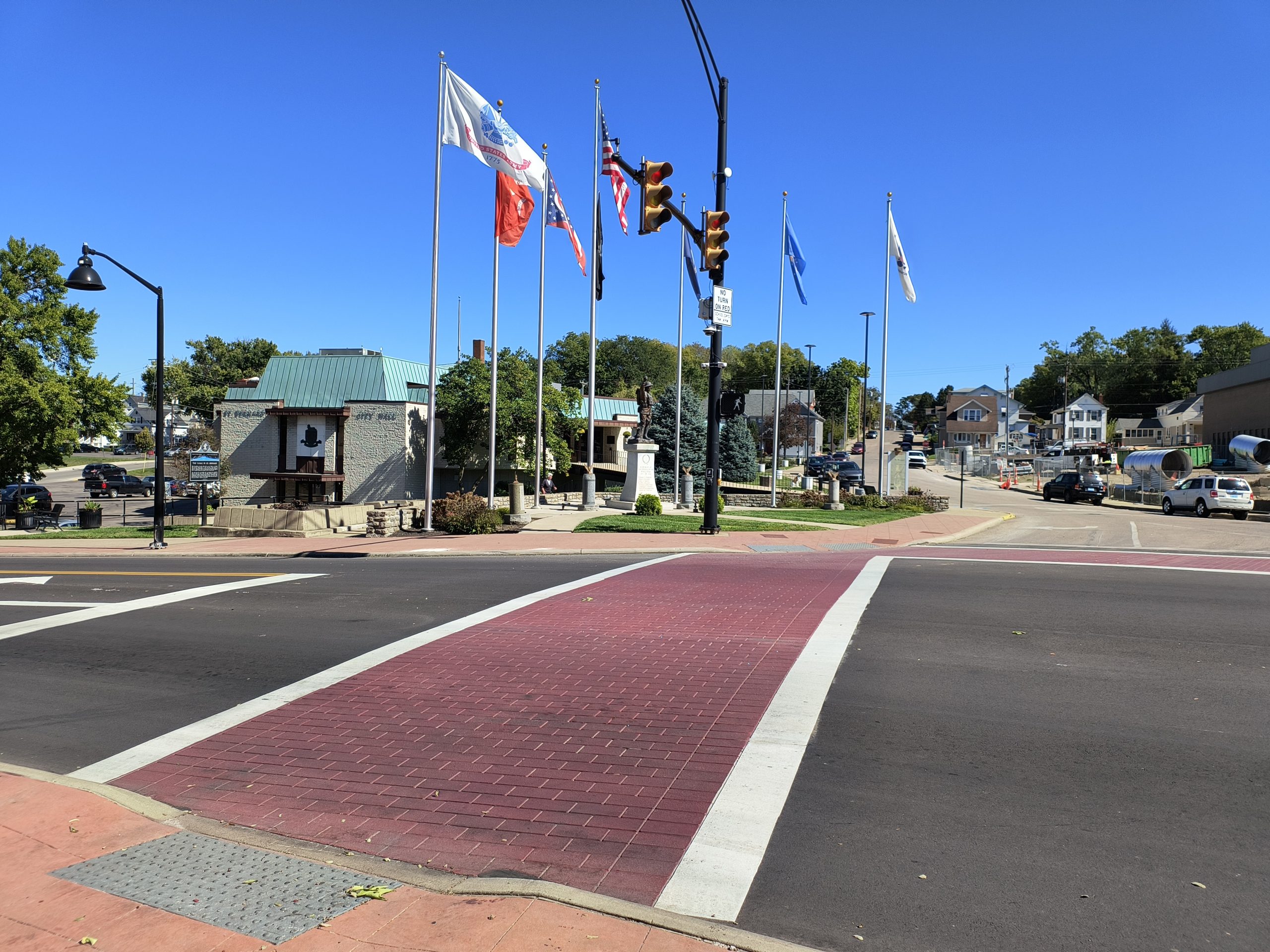
A crosswalk doesn’t have to be white bars on black pavement. A&A Safety installs decorative crosswalks using preformed thermoplastic in custom colors, including school colors, that meet the same durability and retroreflectivity standards as traditional thermoplastic markings. Bright, high-contrast colors naturally draw driver attention, reinforcing the safety function of the crosswalk while giving schools an opportunity to express identity and pride at campus entrances and pedestrian routes.
Preformed thermoplastic pieces are heat-bonded directly to the pavement, producing clean, precise shapes and patterns that hold up to traffic and weather. For schools looking to make a visual statement at a prominent crossing, a decorative crosswalk is a practical upgrade that does double duty.
Crosswalk Compliance, Liability, and Community Investment
Municipalities that maintain their own roads are responsible for ensuring that crosswalk markings are present, legible, and in compliance with MUTCD standards. Faded or missing crosswalk markings at a school crossing are a documented liability exposure. A systematic crosswalk assessment and replacement program — particularly ahead of the school year — is a straightforward way to address that risk.
Properly marked and signed school crosswalks are also a visible community investment in child safety — one that parents, school boards, and elected officials notice. A&A Safety can support single-location installations and multi-site crosswalk programs across a municipality or school district.
Why Municipalities, Counties and School Districts Choose A&A Safety for School Crosswalks
MUTCD Expertise
Crosswalk marking requirements (line width, placement, pattern, retroreflectivity) are specified in the MUTCD and supplemented by state guidance.
Complete Package: Markings and Signs
A&A Safety provides both the pavement markings and crossing signs, installed by our team. No gaps between contractors, no coordination overhead.
Regional Service
With offices in Cincinnati (Amelia), Cleveland, and Dayton, A&A Safety serves municipalities and school districts throughout Ohio and into Kentucky, Indiana, and neighboring states.
Multi-Site Program Capability
We regularly work with municipalities and counties on multi-location crosswalk programs, coordinating scheduling and crews to work through an inventory of locations efficiently.
Frequently Asked Questions
What is the difference between thermoplastic and painted crosswalk markings?
Thermoplastic is significantly more durable, typically lasting three to seven or more years, and maintains retroreflective performance over its service life. Paint requires reapplication every one to two years depending on traffic and weather. For school crosswalks on higher-volume roads, thermoplastic provides better long-term value. Paint is appropriate for lower-volume roads and interim installations.
Which crosswalk pattern is recommended for school crossings?
The FHWA recommends high-visibility patterns, ladder or continental, for pedestrian crossings near schools and other high-pedestrian-activity locations. The continental pattern provides the greatest visibility and is increasingly the standard for new school crosswalk installations. We can advise on the appropriate pattern for your specific location and traffic conditions.
Are crossing signs mounted in the roadway (also called “in-street signs”) required at school crosswalks?
These are not universally required, but the MUTCD permits them as a supplement to post-mounted signing at unsignalized crossings, and they are strongly recommended at higher-risk locations such as multi-lane roads and locations with documented pedestrian-vehicle conflicts. We can assess your crossing locations and recommend where in-street signs would provide meaningful safety benefit.
Can you assess our existing school crosswalks and identify which need replacement?
Yes. A&A Safety can conduct a crosswalk assessment across your municipality or district, evaluating marking legibility, retroreflectivity, pattern compliance, and the presence of appropriate signage. We can then prioritize locations and develop a replacement schedule that fits your budget and timeline.
Who is responsible for school crosswalk markings in Ohio?
The agency that maintains the road surface is responsible for crosswalk markings. On state routes, ODOT has jurisdiction. On local roads, responsibility falls to the municipality, county, or township. In practice, many school crosswalk projects involve coordination between the road authority and the school district, and A&A Safety is experienced working with both. A&A Safety teams coordinate with the Department of Transportation (DOT) in all the states we serve.
Request a Quote for School Crosswalk Markings
Whether you need a single school crosswalk remarked before the school year or a district-wide crosswalk assessment and replacement program, A&A Safety has the materials, crews, and MUTCD expertise to get it done.